Why Zoos Are Putting QR Codes on Every Exhibit (And What They Unlock)
Published on July 3, 2026 · 5 min read
Why Zoos Are Putting QR Codes on Every Exhibit (And What They Unlock)
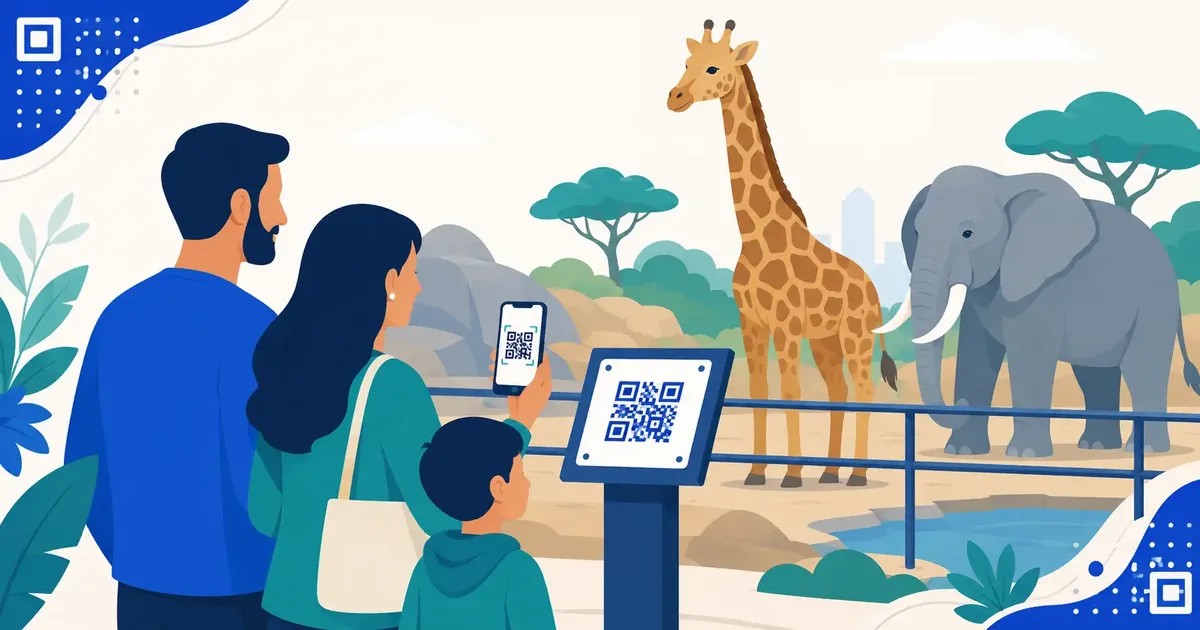
A kid presses against the railing at the giraffe enclosure and fires off the question every parent dreads: "Why is its tongue purple?" The sign on the fence has three sentences and none of them answer it. But there's a small QR code in the corner, and one scan later the family is watching a keeper explain it in a 40-second video.
That's the quiet shift happening at zoos everywhere. The old plaque could only say so much. A QR code turns the same patch of fence into a doorway to as much as a curious visitor wants.
The Limits of a Printed Plaque
A traditional exhibit sign is stuck with whatever fit on the metal the day it was made. It can't show the animal eating. It can't tell you today's feeding time. And when the resident tortoise passes and a new one arrives, the sign is suddenly wrong until someone reprints it.
Space is the other wall. A plaque holds a paragraph. But visitors have wildly different appetites: a five-year-old wants to see the animal splash, a teenager wants the weird facts, a grandparent wants the conservation story. You can't serve all three on one small board. A scan lets each of them choose their own depth.
What Sits Behind a Zoo QR Code
The code is just a pointer to a page the zoo controls. That page can hold far more than any sign, and the zoo can refresh it anytime without touching the exhibit.
A well-built exhibit page usually offers:
- A short keeper video of the animal doing something interesting.
- The species' range, diet, and conservation status.
- Today's feeding or enrichment times.
- The individual animal's name and backstory, if it's a resident with a following.
- A clear link to donate or adopt symbolically.
Because the content lives on a page and not in the code, the zoo updates it seasonally, swaps in new videos, and corrects details in seconds. If you're curious how that flexible link setup works, our explainer on static vs dynamic QR codes breaks it down.
A Day at the Exhibit: How Visitors Actually Use It
Picture a family working through the reptile house on a slow Tuesday. At the komodo dragon, the sign gives the basics, but the ten-year-old wants more. She scans the code and gets a short clip of the last feeding, plus a fact about how the dragon tracks prey. She's hooked, and she reads the conservation status out loud to her brother.
At the next enclosure, the parents scan instead and find the day's talk schedule, so they plan the rest of their visit around the keeper chats. Same code, different needs, both met. The exhibit did more work without a single extra sign.
The Conservation Angle Zoos Care About Most
Beyond entertainment, these codes carry a mission. Modern accredited zoos exist largely to educate and to fund conservation, and a scan is a natural bridge to both.
A page can explain exactly why a species is threatened and what the zoo is doing about it, then offer a one-tap way to help. That's a far stronger call to action than a line of small print on a plaque. The Association of Zoos and Aquariums publishes helpful standards on education and conservation that shape how good exhibits are built (aza.org), and the IUCN Red List is the go-to source zoos link to for accurate, current status information (iucn.org).
When a visitor donates from the giraffe fence, still watching the animal, that's the connection zoos work hard to create.
Building a Code That Survives the Outdoors
A zoo code lives outside, in sun, rain, and the grip of sticky hands. If it fades or peels, it fails silently, and nobody tells you. So build it to last.
Here's a practical checklist:
- Print big and bold. A code at least four inches wide, dark on light, scans easily even through a fence.
- Weatherproof it. Use UV-resistant material or a laminate so sun doesn't wash out the contrast.
- Use dynamic codes. You'll want to change videos and feeding times without reprinting every sign.
- Add a prompt. A line like "Scan to watch her eat" earns far more scans than a bare code.
- Place it at eye level. Include a lower one for kids and wheelchair users.
Test each sign after installation, and re-scan them every few months to catch any that have faded.
Beyond the Big Cats
The same idea scales across the whole grounds. Aquarium tanks, petting zoos, and botanical sections all benefit from a scan that adds depth on demand. If your facility runs indoor tanks too, the approach carries straight over to interactive aquarium exhibits, where video and live feeding info shine just as brightly. You can plan a whole self-guided tour around codes, letting visitors set their own pace.
What the Best Exhibit Pages Get Right
A code is only as good as the page behind it. The zoos that see high scan rates tend to follow a few simple habits worth copying.
They lead with motion. The first thing on the page is a short video, not a wall of text, because a visitor who scanned a giraffe sign wants to see the giraffe. Text can follow underneath for those who keep reading.
They keep it short. A strong exhibit page respects that the visitor is standing up, phone in hand, with a kid tugging their sleeve. A minute of content beats ten minutes nobody finishes.
They update with the seasons. New births, new arrivals, and fresh footage give regular visitors a reason to scan again on their next trip, so the same sign stays interesting for years.
They make helping easy. The donate or adopt link sits right there while the emotion is fresh, not buried three taps deep. A visitor moved by the animal in front of them is far more likely to give in that moment than after they've gone home.
And they measure. By watching which exhibits get scanned most, a zoo learns what its visitors actually care about, then pours effort into the pages that earn it. Small, steady improvements turn a nice feature into a real education tool.
Frequently Asked Questions
Do visitors need to download an app to scan? No. Modern phone cameras read QR codes automatically. Visitors just point and tap the link that appears, with nothing to install.
What happens if the exhibit animal changes? With a dynamic code, the zoo simply updates the page behind it. The sign stays put and the code keeps working, now pointing to the new resident's details.
Can small zoos afford this? Yes. Generating codes is free, and the main costs are durable printing and someone to keep the pages current. It scales down to a single exhibit comfortably.
How do zoos know if the codes get used? Dynamic codes can report scan counts, so a zoo can see which exhibits draw the most interest and improve the pages that lag.
Turn Every Enclosure Into a Conversation
A plaque tells. A QR code invites, showing video, sharing feeding times, and turning a passing glance into a real connection with the animal and its future. Whether you run a small petting zoo or a large park, you can start with one exhibit and grow from there. Build your first exhibit code for free with the QRinsec generator and watch that giraffe railing become the most interesting spot in the zoo.
Published by the QRinsec Editorial Team — practical documentation about QR codes, barcode standards, and QRinsec’s client-side tools. Content is reviewed against product testing and published technical documentation from sources such as GS1, Denso Wave, and ISO standards where applicable.
Have questions or corrections? Contact us.
Create your QR code for free
No sign up, no limits — generate and download in seconds.
Open the generator